
 Brr, it’s cold!
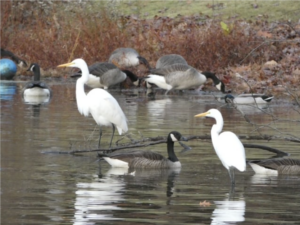
I took this picture in December a couple of years ago at the lake in our neighborhood in Yorktown, Virginia. The temperature was about 38 degrees that day. The white birds are great egrets, stopping over as they migrate south. The Canada geese may be migrating as well, although we have a lot who are year ’rounders here.
I love going for walks any day I can, which ends up being about five days a week. I check out the visitors to our lake, species like cormorants, bufflehead ducks, hooded mergansers, great blue herons, and the ever-reliable mallards. And I have questions, always questions.
Have you ever wondered how birds can tolerate cold water? I’ve seen ducks and geese standing on frozen ponds and swimming in icy lakes. The water in the picture above was well below forty degrees.
Curious, I turned to the Cornell Lab of Ornithology for the answer to my question.
Cornell notes that while body temperature in birds runs about 105 degrees, their feet and legs can function with a temperature that is slightly below freezing, 32 degrees. This is in part because birds have a special kind of circulation, a “countercurrent heat exchange” system that sends warm blood from their bodies down to their feet and cold blood from their feet up to their bodies. Along the way, the extremes in blood temperatures are moderated.
Now I suspect you have a question: What does this have to do with SAR and mystery/suspense?
Only this: I love nature. That’s one reason I write about dogs and horses and their uncanny ability to make us, well, more whole. I see God in nature, in the beauty of a sunset, the amazing design of a horse’s hoof, and yes, in birds. When I observe nature and see God in it I find peace.
Try it.